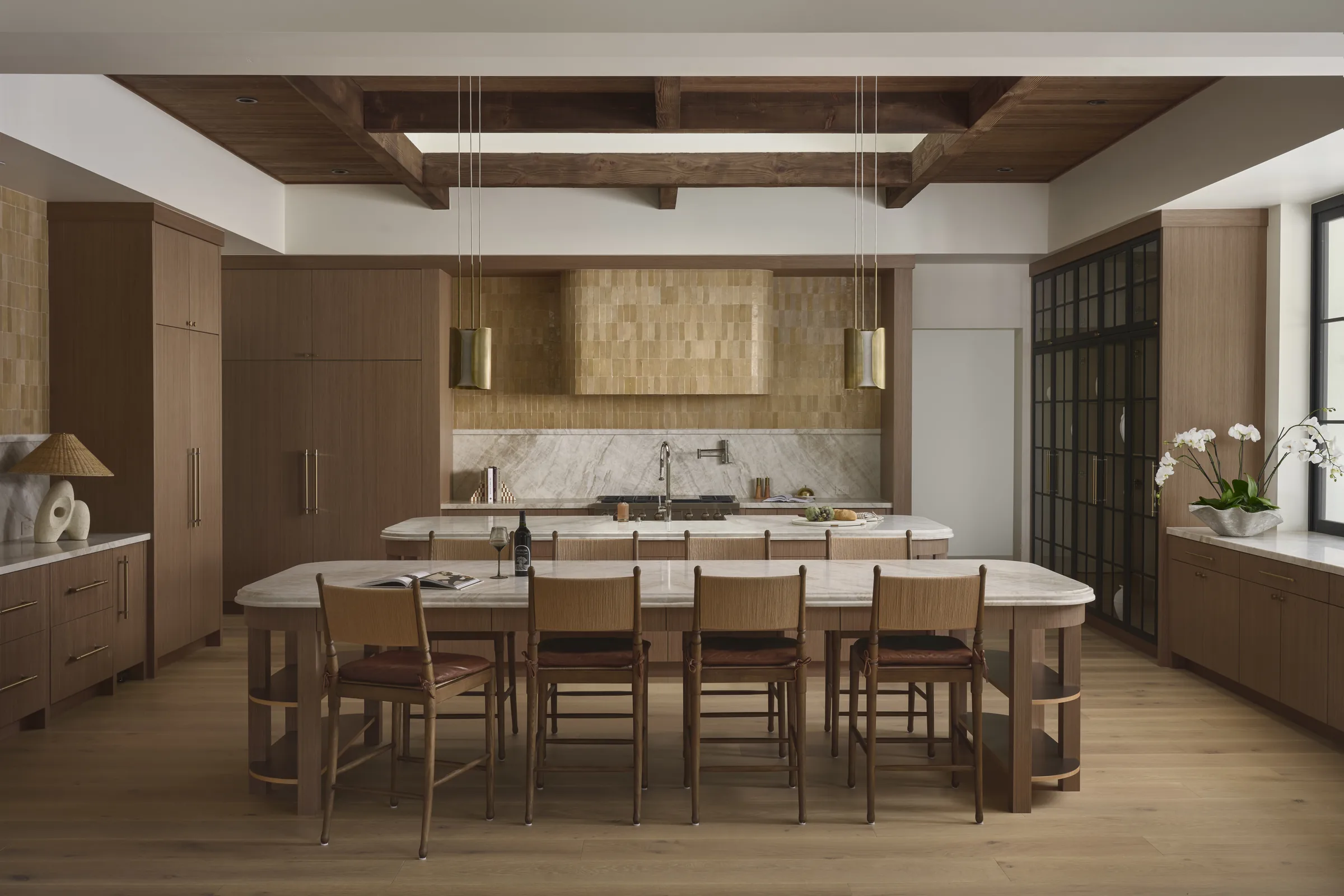
What Does It Cost to Renovate a Luxury Home in Paradise Valley in 2026
A significant renovation or addition on a luxury home in Paradise Valley typically starts at $500,000 for a focused, meaningful scope of work and can reach several million dollars for a full interior transformation or large addition, depending on complexity and finish level. Where a specific project falls in that range depends less on square footage than on three things: how much of the home’s structure and systems are being touched, what condition those systems are in once the walls come open, and the finish level the design calls for. This guide breaks that down by scope, walks through what actually moves the number, and looks at a recent Paradise Valley renovation we completed to show where the budget goes in practice.
Renovation Cost by Scope
Luxury renovation budgets in Paradise Valley generally fall into three tiers. Knowing which one your project belongs in before you start pricing conversations will tell you more than any single per-square-foot number, because the difference between tiers has more to do with how much of the home you’re touching than how big the home is.
One or two major spaces, most often a primary suite, kitchen, or great room, reimagined with new layout, finishes, and systems. This tier covers projects that don’t touch the home’s overall footprint or require significant structural work, but do involve real reconfiguration rather than a surface-level update.
New square footage, structural changes that open up multiple rooms, or a combination of the two. This is where most of the renovation work we take on in Paradise Valley actually lands, because it’s the tier that lets a home genuinely catch up to how a family lives now without a full teardown.
Every major system replaced, the floor plan substantially reworked, and finish selections throughout the home brought to a current luxury standard. Projects at this level are close in scope and complexity to new construction, and the budget conversation should be approached that way from the start.
These ranges reflect all-in cost: design, permitting, structural and mechanical work, and finishes. They don’t include the kind of surprises that a proper pre-construction assessment is supposed to catch before they become surprises, which is the subject of the next section.
What Actually Drives the Cost
Square footage matters less in a renovation than it does in new construction, because you’re not paying to enclose empty space, you’re paying to change what’s already there. Four factors do most of the work in determining where a project lands within its tier.
What’s behind the walls. Homes built more than a few decades ago were wired, plumbed, and insulated to a standard that doesn’t match current expectations, and you don’t know exactly what you’re dealing with until the walls are open. Aging electrical panels, undersized HVAC systems, and plumbing that needs to be rerouted rather than patched are the single biggest source of budget movement in a renovation, and they’re also the reason a proper pre-construction assessment matters more here than almost anywhere else in the building process.
How much structure is changing. Removing a load-bearing wall to open a kitchen into a great room is a fundamentally different cost than repainting the same kitchen. Raising a ceiling, relocating plumbing stacks, or adding a second story all require engineering, not just carpentry, and that shows up in both the budget and the timeline.
Materials and finish level. A primary bath finished in porcelain tile and stock fixtures and one finished in natural stone slab, custom millwork, and designer plumbing fixtures can carry a five-figure difference in the same square footage. This is the variable clients have the most control over, and it’s worth having an honest conversation about early, before the design is fully drawn.
Site and jurisdiction. The Town of Paradise Valley has design review standards that apply to renovations touching the building envelope or adding square footage, and hillside lots carry additional engineering requirements on top of that. A renovation on a flat, established lot in a neighborhood like Clearwater Hills moves through that process differently than one on a steep parcel near Mummy Mountain.
The single most common budget surprise in a Paradise Valley renovation isn’t the finishes, it’s what’s discovered once demolition starts. A contractor who builds a real contingency into the budget from day one, rather than pricing optimistically and hoping nothing turns up, is protecting you from the surprise that actually derails renovation projects.
Renovate or Rebuild: Why Paradise Valley Is Different
We’ve written before about why a teardown almost always beats a renovation in Arcadia, where most of the existing housing stock is 1950s and 60s ranch construction with little architectural value worth preserving. Paradise Valley is a different calculation. A meaningful share of the town’s existing homes were designed by notable architects and built to a standard that’s genuinely worth keeping, which means the renovate-versus-rebuild math in Paradise Valley more often favors renovation, provided the home’s structure and architectural bones are sound.
The way to know which side of that line your home falls on isn’t a guess, it’s a site visit and an honest structural assessment before any design work begins. A home with a compelling architectural foundation and outdated systems is a strong renovation candidate. A home with neither is a rebuild, whatever the renovation budget looks like on paper.
A Recent Paradise Valley Renovation: Arizona Contemporary
Our Arizona Contemporary project, an extensive remodel of an existing home in Paradise Valley’s Clearwater Hills neighborhood, illustrates how this works in practice. Working with David Dick Architecture and interior designer KT Tamm, the renovation preserved the home’s original slump block construction, a distinctive material choice that would have been costly and unnecessary to remove, while introducing modern lines, natural light, and refined metal accents throughout.
The scope reflects the “major addition or partial reconfiguration” tier described above: a reimagined primary suite that now includes an exercise room, infrared sauna, and steam shower, a freestanding fireplace dividing the family and billiard rooms, and an entertaining bar finished in black walnut and Emerald Da Vinci quartzite. None of that required demolishing the home’s structural character. All of it required a builder who could evaluate what was worth preserving before pricing the work.
See the full project, including landscape design by Design Ethic, in our portfolio.
Permitting and Design Review in Paradise Valley
Any renovation touching the building envelope or adding square footage in Paradise Valley requires permits and, in most cases, drawings that meet the town’s design review standards, which are more prescriptive than most jurisdictions in the Valley. That process adds real time to a project timeline, typically several months depending on scope, and a contractor without established relationships with the town’s reviewers will lose more of that time than one who works in this jurisdiction regularly.
We are transparent about cost from the very first conversation, including the parts of the estimate that are genuinely uncertain until demolition begins. An honest range early is worth more than a confident number that changes three months into the project.
Common Questions About Renovation Costs in Paradise Valley
Starting the Conversation
If you’re evaluating whether your Paradise Valley home is a renovation candidate or a rebuild, the most useful next step is a site visit and an honest assessment of what your home’s structure and systems can support.
We visit every project personally before any pricing conversation, and we’ll tell you plainly whether renovation or rebuild is the better fit for your home before you commit to either. Contact us here to start that conversation.
You might also find these useful:
Ready to talk about your renovation budget?
We visit every site personally before any pricing conversation. No commitments required to have the first discussion.