Hillside lots in Paradise Valley offer something genuinely rare: positioning you cannot replicate anywhere else in the Phoenix metro area. The views, the privacy, the relationship between the home and the surrounding desert landscape — these are the things that make people spend more on a site and then spend the time required to build on it well.
They also require a level of planning, engineering, and construction expertise that a lot of builders aren’t equipped to provide. The gap between a hillside build done well and one done poorly is visible in the finished product, and sometimes in structural problems that surface years later.
This post covers what building on a hillside lot in Paradise Valley actually involves, where the complexity comes from, and what you need from a builder to do it right.
Why Hillside Lots Command a Premium
The appeal is straightforward. Elevated sites on Camelback Mountain, Mummy Mountain, and the various ridgelines throughout Paradise Valley offer views that simply don’t exist at grade. Mountain faces, city lights, sunrise and sunset sight lines, and a degree of separation from neighbors that flat lots rarely provide.
There’s also a scarcity element. The total number of hillside lots in Paradise Valley is finite, and the ones with the best positioning have largely been built on at least once. When a site like this becomes available, buyers understand they’re competing for something that won’t come back.
But the premium on the lot is only the beginning of what you’ll pay for that positioning. The site work, engineering, and extended timeline that come with hillside construction add meaningful cost to every project. Understanding what drives total project cost on a hillside build before you buy the lot is one of the more important things you can do.
What Makes Hillside Construction Different
Building on a sloped site in Paradise Valley involves a set of technical challenges that don’t exist on flat ground. Each one adds cost and time, and together they define what separates builders who can execute these projects from those who struggle with them.
Geology and Excavation
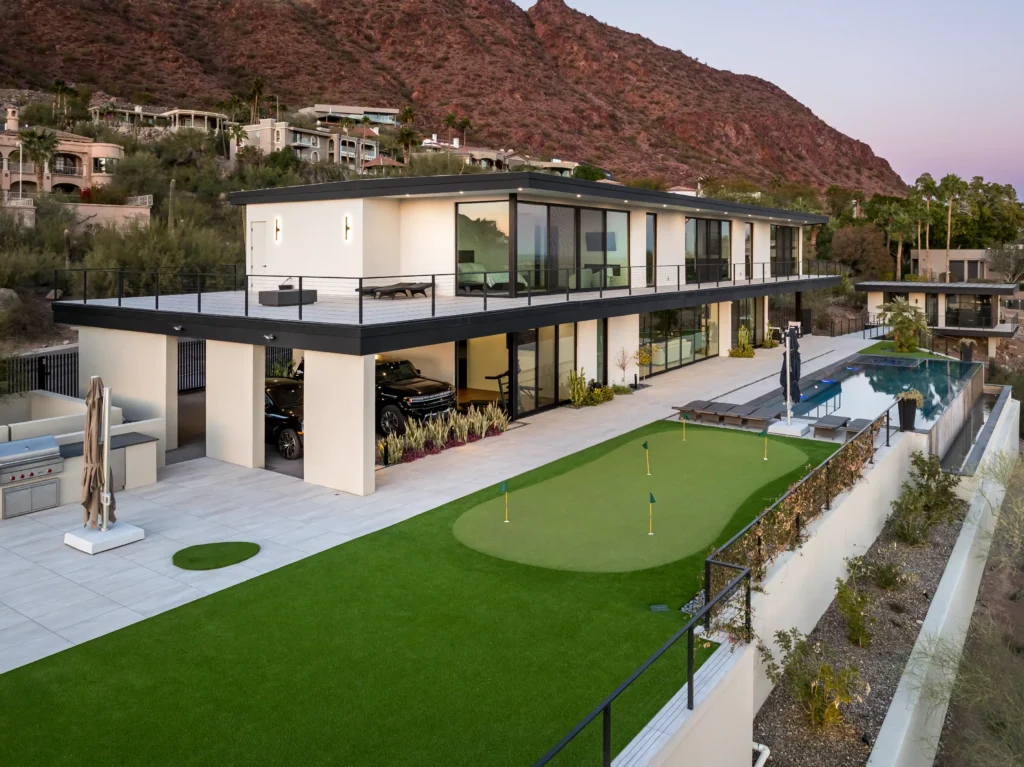
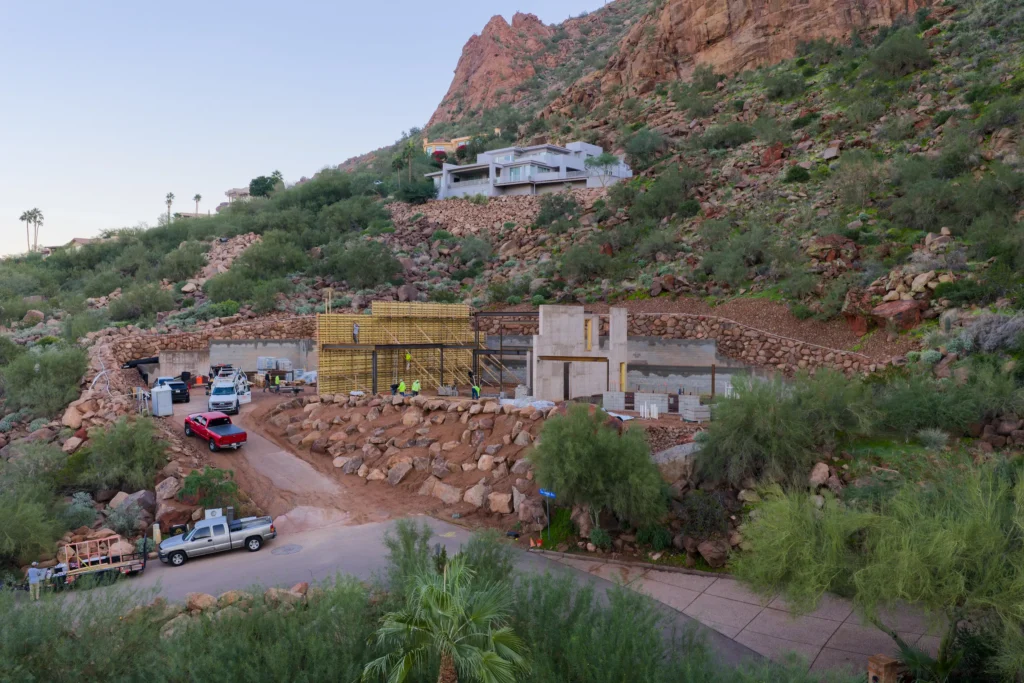
Much of the elevated terrain in Paradise Valley sits on solid granite. Before grading can begin, a geotechnical investigation determines what’s below the surface and what the foundation system needs to account for. On our Tatum Canyon Overlook project, the home was built directly into the granite face of the canyon, requiring precise excavation and structural coordination at a level that a standard residential build simply never encounters. What looks from a distance like a home sitting gracefully on a hillside is the result of months of careful site work before a single wall goes up.
Structural Engineering
Hillside homes require structural systems that account for lateral forces, slope stability, and in some cases seismic considerations that flat-lot construction doesn’t demand at the same level. Steel framing is common in architecturally ambitious Paradise Valley hillside homes because it allows spans and openings that wood framing can’t support, and because the design intent on these sites often involves large glass walls oriented toward views.
On our Elevated Elegance project on the south slope of Camelback Mountain, the structural system was designed around floor-to-ceiling glass openings capturing both the mountain face and city lights below, with a suspended bridge connecting the main house to a dedicated art studio. That level of structural ambition requires an engineer and a builder who understand how to execute it, and a construction team capable of working on a steep site with that kind of precision.
Drainage and Retention
Water moves differently on sloped sites, and managing it is both a structural and a regulatory requirement. Retaining walls, drainage channels, swales, and sometimes underground systems have to be engineered to handle the volume and velocity of water that comes off hillside terrain during monsoon season. Paradise Valley’s municipal requirements for hillside drainage are detailed for good reason — poorly managed water on a sloped site causes damage that’s expensive to repair and in some cases affects neighboring properties.
Retaining wall systems on significant hillside builds can run $200,000 to $600,000 or more depending on the site, and they’re not optional. They’re part of what makes the project buildable and what protects the home and site for decades after completion.
Grading and Access
Getting equipment onto a steep site is a logistical challenge that adds time and cost to every phase of construction. Crane access for structural steel, concrete pump trucks, and the sequencing of trades on a site where movement is restricted all require planning that flat-lot construction doesn’t demand. Experienced hillside builders account for this in their schedules and their subcontractor coordination. Those who don’t find themselves with delays that compound across the entire construction timeline.
The Permitting Process on Hillside Sites
Paradise Valley’s hillside regulations are among the most detailed residential requirements in Arizona, and for good reason. The town has a genuine interest in preserving the visual character of its hillsides, managing drainage responsibly, and ensuring that homes built on challenging terrain are engineered to last.
If your project triggers hillside review you’re looking at an additional layer of municipal review beyond standard permitting. This review examines grading, drainage, the home’s relationship to the ridge line, view corridor impacts, and structural engineering. It adds time to an already extended permitting process, and it requires a complete and well-prepared submittal package to move through cleanly.
Plan for 4 to 6 months of permitting on a hillside project, and potentially longer if revisions are required during review. Understanding the full timeline from land purchase through permitting and construction helps set realistic expectations before you begin.
Builders who have worked through Paradise Valley’s hillside review process multiple times know how to prepare submissions that address the town’s concerns directly. That experience reduces the number of revision cycles and keeps the permitting phase from extending further than it needs to.
What Good Hillside Architecture Looks Like
The best hillside homes in Paradise Valley don’t fight their sites. They work with the terrain to create something that couldn’t exist anywhere else. That requires an architect and a builder who understand how to read a site and translate its characteristics into an architectural response rather than just stacking a house on a slope.
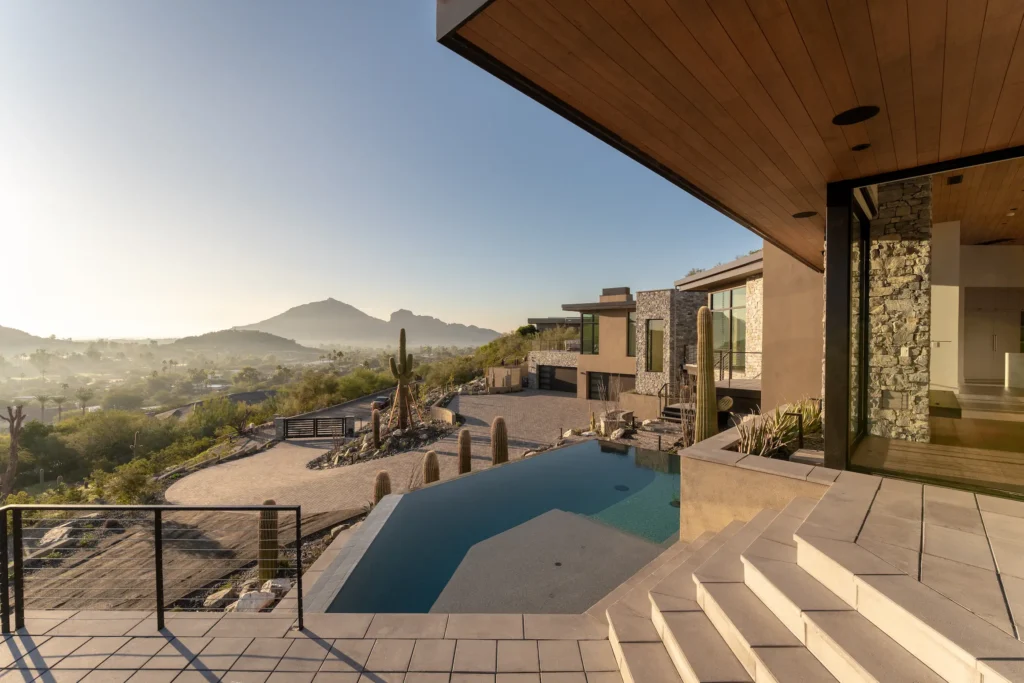
Our Modern Hillside project captures this well. The home was designed around mountain and city-light views with generous glass walls and soaring ceilings, using warm wood, concrete, and glass to ground the modern geometry in the landscape rather than contrast with it. Living areas flow to terraces and an outdoor entertaining area that engages the site’s elevation rather than apologizing for it.
This is the difference between a hillside home that feels like it belongs and one that feels like it was forced onto a difficult site. The design intent has to account for the site’s specific conditions from the very beginning, and the builder has to be capable of executing that intent in a construction environment that demands more than standard residential work.
Evaluating a Hillside Lot Before You Buy
The single most valuable thing you can do before purchasing a hillside lot in Paradise Valley is walk it with an experienced builder. A builder who has worked on hillside sites in this market can look at a lot and give you a realistic picture of what you’re buying: what the site work is likely to involve, what the permitting process will require, and how those factors affect your total project cost and timeline.
Lots that look similar on paper can vary enormously in what they’ll cost to build on. Two sites at the same elevation with similar views might have completely different geologies, drainage characteristics, and access conditions. The lot that costs $500,000 more to purchase might be meaningfully cheaper to build on. The lot that looks like a bargain might have $600,000 in site work sitting below the surface.
Understanding what makes certain Paradise Valley lots worth their premium requires the kind of on-site evaluation that comes from having done this work many times in this specific market.
What to Look for in a Builder for Hillside Work
Hillside construction in Paradise Valley requires a specific kind of experience. General residential construction expertise doesn’t translate directly to what these sites demand. When you’re evaluating builders for a hillside project, there are a few things worth asking directly.
How many hillside projects have they completed in Paradise Valley specifically? Experience in other markets helps, but Paradise Valley’s geology, municipal requirements, and architectural expectations are specific enough that local hillside experience matters more than general hillside experience elsewhere.
Who are their structural engineers and geotechnical consultants, and how long have they worked with them? On a hillside build, the quality of those relationships affects both the design process and the construction outcome. Builders who have worked repeatedly with the same engineering teams have better-calibrated expectations about what designs are actually buildable and at what cost.
What does their communication process look like during construction? Hillside builds involve more decisions and more variables than flat-lot construction. You want a builder with a clear communication system and a project manager who is on site regularly and can answer questions without checking with three other people.
Can they show you completed hillside projects you can visit or whose owners you can speak with? Looking at finished work and talking to past clients who built on hillside sites is the most reliable way to evaluate whether a builder can actually execute what they’re describing.
Tiara Sun Development has been building custom homes in Paradise Valley for over 25 years, including some of the most technically demanding hillside projects in the market. If you’re evaluating a hillside site or considering a build and want to understand what the process realistically looks like, we’re glad to walk through it with you.
For buyers who are still in the process of evaluating builders more broadly, what separates the Paradise Valley custom home builders worth hiring from those who struggle with projects like these comes down to a set of specific, assessable things.